English
 中文简体
Content
- 1 1. Thermodynamic Principles of Cryogenic Distillation
- 2 2. Column Internal Configurations: Structured Packing vs. Sieve Trays
- 3 3. Mechanical Design, Metallurgy, and Construction Standards
- 4 4. Advanced Process Control, Optimization, and Safety
- 5 5. Key Industrial Separation Applications
- 6 6. Frequently Asked Questions (FAQ)
In large-scale industrial gas production, the Cryogenic Distillation Column (also referred to as the fractionation tower or distillation column) serves as the core thermodynamic separation unit. Operative within air separation units (ASUs) and liquefied natural gas (LNG) processing facilities, these specialized columns separate liquefied multi-component gas mixtures into high-purity streams of oxygen, nitrogen, argon, and methane based on subtle vapor-liquid equilibrium differences at sub-zero temperatures.
Achieving optimal gas separation requires precise column height calculations, thermodynamic pressure balancing, advanced mass transfer internals, and rigorous thermal isolation from ambient surroundings. Unlike non-cryogenic separation technologies such as pressure swing adsorption or membrane filtration, cryogenic distillation relies entirely on phase change and thermal rectification across dozens or hundreds of theoretical stages to achieve ultra-high purity levels exceeding 99.999%.
1. Thermodynamic Principles of Cryogenic Distillation
Distillation relies fundamentally on the phase equilibrium existing between liquid and vapor mixtures. Within a Cryogenic Distillation Column, ascending vapor comes into intimate contact with descending reflux liquid across multiple internal stages. Components with higher volatility (lower boiling points) evaporate preferentially into the rising vapor phase, while components with lower volatility condense into the descending liquid stream.
In air separation, liquefied atmospheric air is separated into its constituent components based on their respective boiling points at standard operating pressures:
- Nitrogen (N2): Boiling point of -195.79 ℃ (77.36 K). Nitrogen is the most volatile component in liquid air, meaning it vaporizes first and continuously travels toward the top of the fractionation column where it is withdrawn as a high-purity gas or condensed into liquid nitrogen.
- Argon (Ar): Boiling point of -185.85 ℃ (87.30 K). Argon possesses an intermediate volatility that places its concentration peak directly within the middle sections of low-pressure distillation towers, necessitating dedicated side-draw extraction loops.
- Oxygen (O2): Boiling point of -182.96 ℃ (90.19 K). Oxygen is the least volatile primary component, accumulating steadily at the base of the low-pressure column as a high-purity liquid or gas product.
The efficiency of this thermodynamic separation is heavily governed by the reflux ratio—the proportion of condensed liquid returned to the top of the column relative to the product drawn off. Maintaining a precise reflux ratio ensures that mass transfer driving forces remain optimal throughout every meter of the column height, preventing pinch points where separation ceases entirely.
2. Column Internal Configurations: Structured Packing vs. Sieve Trays
Selecting column internals significantly influences pressure drop, overall column height, and energy efficiency. Historically, fractionation towers utilized perforated sieve trays where vapor bubbled upward through a pool of liquid. However, in modern cryogenic distillation columns, corrugated structured packing has largely superseded traditional trays due to its exceptionally low pressure drop per theoretical stage.
Structured packing consists of thin, corrugated metal sheets arranged in interlocking geometric patterns that promote smooth, uniform liquid film distribution and gas-liquid contact across a massive specific surface area (typically ranging from 250 to 500 square meters per cubic meter of packing volume). The reduced pressure drop across structured packing beds translates directly into a lower discharge pressure requirement for front-end main air compressors, cutting overall plant electricity consumption by up to 10% to 15%.
Furthermore, structured packing exhibits a significantly lower liquid holdup volume compared to conventional tray columns. This lower holdup reduces startup times, accelerates dynamic response during load adjustments, and provides the stable hydrodynamic conditions required for complex side-column separations such as argon recovery.
| Performance Parameter | Corrugated Structured Packing | Conventional Sieve Trays |
|---|---|---|
| Pressure Drop per Stage | Very Low (0.2 - 0.5 mbar/stage) | High (3.0 - 6.0 mbar/stage) |
| Liquid Holdup | Minimal liquid holdup, rapid dynamics | Moderate to high liquid holdup, slower response |
| Turn-Down Capability | Wide operating range (30% to 120% capacity) | Narrow operating window (60% to 100% capacity) |
| Column Diameter Impact | Smaller diameter required for equal throughput | Requires larger column shell diameter |
| Argon Separation Applicability | Essential for high-recovery argon purification | Impractical for high-stage count argon columns |
3. Mechanical Design, Metallurgy, and Construction Standards
Cryogenic distillation columns operate under extreme thermal environments and sub-zero temperatures, requiring advanced structural engineering and strict adherence to pressure vessel manufacturing codes. Standard carbon and low-alloy structural steels undergo a severe ductile-to-brittle transition when subjected to cryogenic conditions, rendering them entirely unsuitable for low-temperature pressure containment.
Consequently, cryogenic columns are fabricated using austenitic stainless steels (such as grade 304 or 304L) or specialized high-purity aluminum alloys (such as 5083-O). These materials retain high fracture toughness, impact strength, and tensile reliability even at liquid nitrogen temperatures (-196 ℃). Column shells are rolled and welded using rigorous non-destructive testing (NDT), including 100% radiographic examination of all longitudinal and circumferential seam welds to eliminate micro-defects.
In a standard industrial air separation plant, the double-column arrangement positions the high-pressure column directly beneath or adjacent to the low-pressure column. These two distinct pressure zones are linked thermally by a shared primary heat exchanger known as the main condenser-reboiler. In this device, condensing high-pressure nitrogen vapor from the top of the lower column surrenders its latent heat of vaporization to boil liquid oxygen pooled at the base of the upper column, achieving simultaneous mass and thermal integration without mixing the fluid streams.
4. Advanced Process Control, Optimization, and Safety
Because cryogenic distillation columns exhibit long thermal time constants and highly non-linear dynamic responses, advanced automation and control architectures are essential for continuous, stable operation:
- Advanced Process Control (APC): Multivariable predictive algorithms constantly analyze real-time feed air fluctuations, ambient temperature shifts, and downstream product demand, automatically adjusting reflux split ratios and liquid draw rates to maintain strict purity tolerances.
- Differential Pressure Monitoring: Networks of high-precision differential pressure transmitters track hydraulic resistance across packed beds and tray sections. Rapid spikes in differential pressure indicate incipient column flooding or liquid entrainment, triggering automated corrective throttle actions.
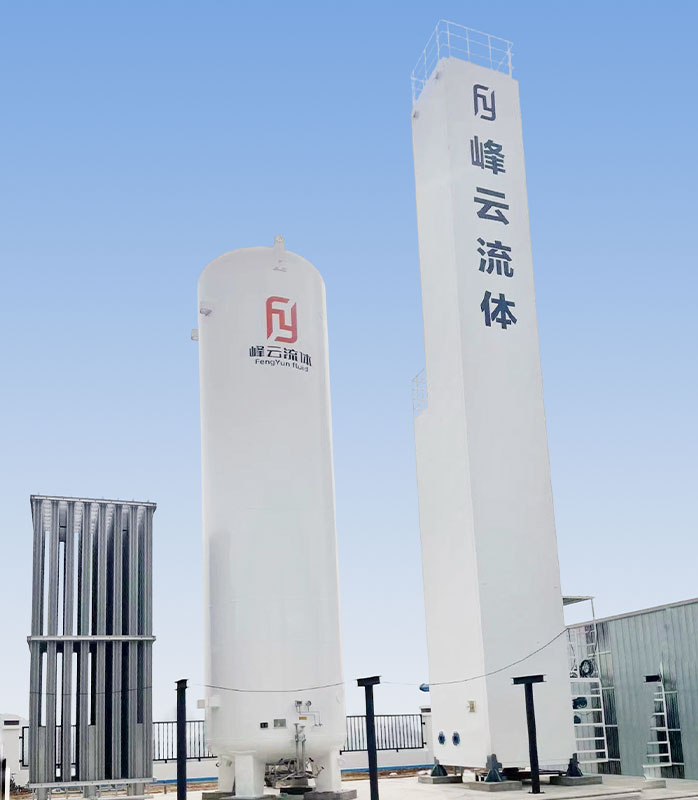
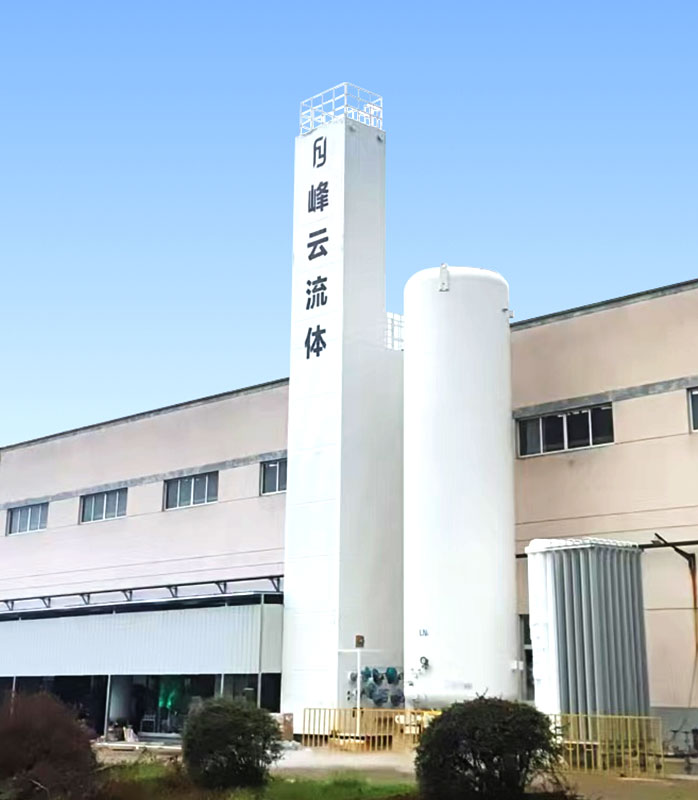
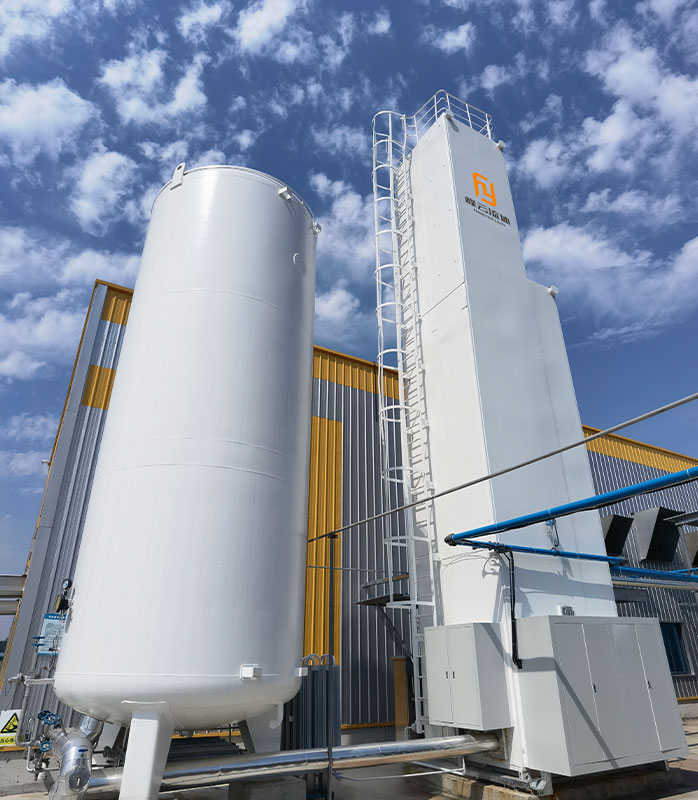
- Cold Box Thermal Insulation: Cryogenic columns are housed inside a towering structural steel casing known as a cold box. The entire interstitial volume surrounding columns, heat exchangers, and interconnecting piping is filled with expanded volcanic perlite insulation and maintained under a dry nitrogen purge to eliminate moisture ingress, convection currents, and heat leakage.
- Hydrocarbon Safety Management: Trace accumulation of atmospheric hydrocarbons—particularly acetylene—inside liquid oxygen reboilers poses severe safety risks. Modern plants deploy automated molecular sieve beds for front-end adsorption alongside continuous online hydrocarbon analyzers and liquid purge bleed streams to maintain contaminant concentrations far below safety thresholds.
5. Key Industrial Separation Applications
Cryogenic distillation technology is deployed across multiple heavy industrial sectors where high-volume, ultra-pure gases are required for continuous chemical and manufacturing processes:
- Large-Scale Air Separation Units (ASUs): Supplying tonnage quantities of gaseous oxygen for basic oxygen steelmaking (BOF) furnaces, high-purity nitrogen for semiconductor wafer annealing, and pure argon for specialized metal welding and shielding applications.
- Liquefied Natural Gas (LNG) Processing: Utilizing cryogenic fractionation columns for nitrogen rejection units (NRU) to strip excess nitrogen from natural gas streams, as well as recovering heavy natural gas liquids (NGL) and extracting high-purity helium.
- Petrochemical Fractionation: Employing sub-zero distillation towers for olefin separation, including ethylene-ethane splitters and demethanizer units operating at cryogenic temperatures to separate cracked gas streams.
6. Frequently Asked Questions (FAQ)
A single distillation column operating at atmospheric pressure cannot produce pure oxygen and pure nitrogen simultaneously, as condensing pure nitrogen requires a lower temperature than boiling pure oxygen at the same pressure. A double-column system operates the lower column at higher pressure (~5.5 to 6.5 bar) and the upper column at lower pressure (~1.3 to 1.6 bar). This pressure differential aligns the condensing temperature of nitrogen at the bottom with the boiling temperature of oxygen at the top, enabling heat transfer across the shared condenser/reboiler.
Corrugated structured packing provides a large specific surface area per unit volume while maintaining high void fractions. This design dramatically lowers the vapor pressure drop per theoretical stage compared to traditional trays. A lower pressure drop reduces the compressor discharge pressure required at the front end, decreasing the overall power consumption of the plant.
Argon has a boiling point situated between oxygen and nitrogen, causing it to accumulate in a specific middle zone of the low-pressure column (typically where argon concentration reaches 7% to 10%). A vapor side-draw is taken from this peak location and fed to an auxiliary argon distillation column, where argon is separated from oxygen without contaminating the main oxygen and nitrogen product streams.
Flooding occurs when the upward vapor velocity is high enough to impede the downward flow of liquid reflux, causing liquid to accumulate on trays or packing sections. This degrades separation efficiency and increases pressure drop. Operators monitor differential pressure across column sections and use automated control loops to adjust air feed rates or heat input to keep column velocities safely within operating limits.
Cryogenic distillation columns are enclosed inside a structural steel shell known as a cold box. The free space around the column, exchangers, and piping is filled with expanded volcanic glass perlite or insulation materials, combined with a dry nitrogen purge to prevent moisture ingress and ice formation.
Partnering for Gas Infrastructure Success
When implementing complex industrial gas infrastructure, specialized manufacturing and technical execution are essential. Suzhou Fengyun Fluid Technology Co., Ltd. specializes in the design, manufacturing, delivery, and operation of cryogenic air separation systems for industrial oxygen, nitrogen, and argon. Backed by a team of 86 engineers and technical specialists, the company’s capabilities span air compression and separation station planning, air compression systems and air separation equipment sales and leasing, on-site gas generation, and outsourced technical services. Leveraging an IoT-enabled platform, Fengyun delivers smart gas supply solutions tailored to customer operations.
 Previous