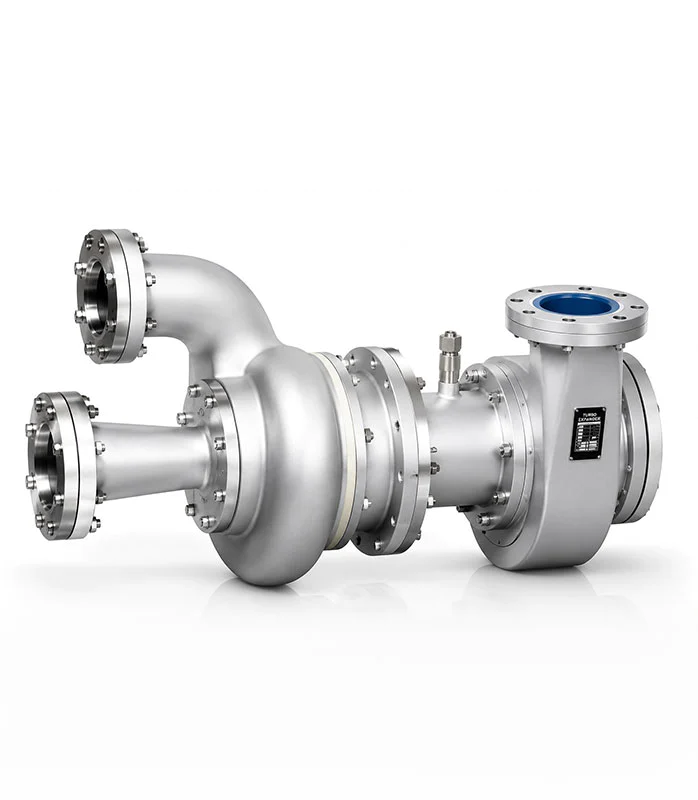
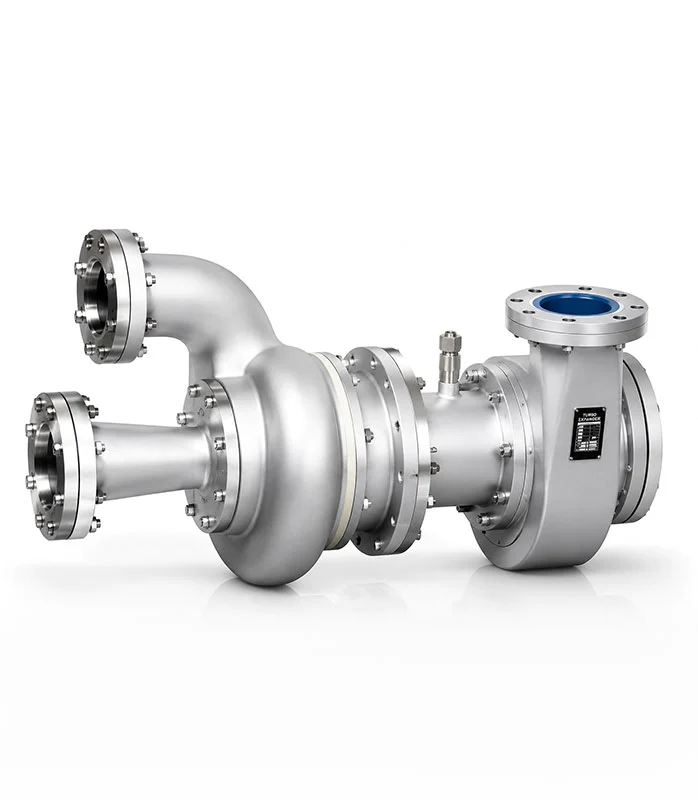
Custom Cryogenic Turbo Expanders & High-Efficiency Expansion Refrigeration Turbines
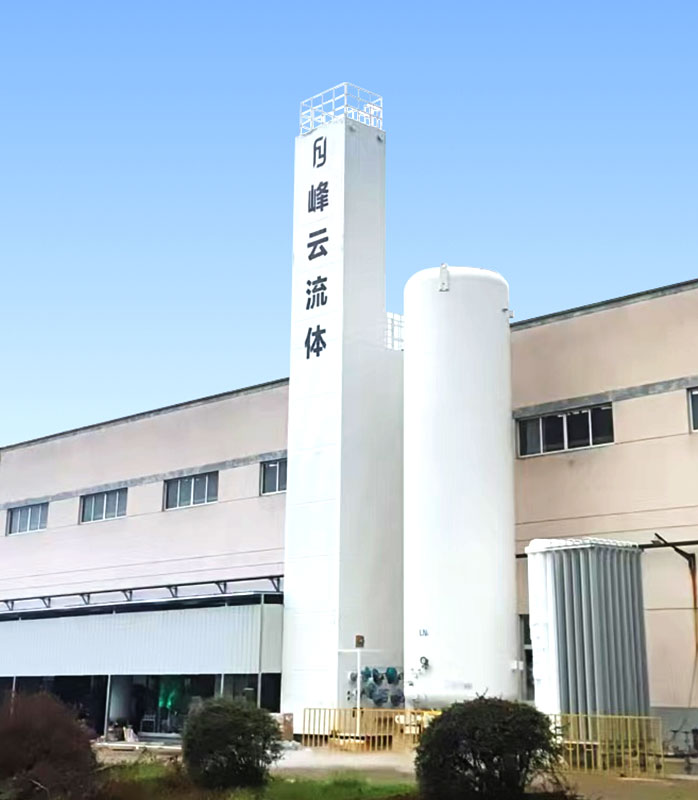
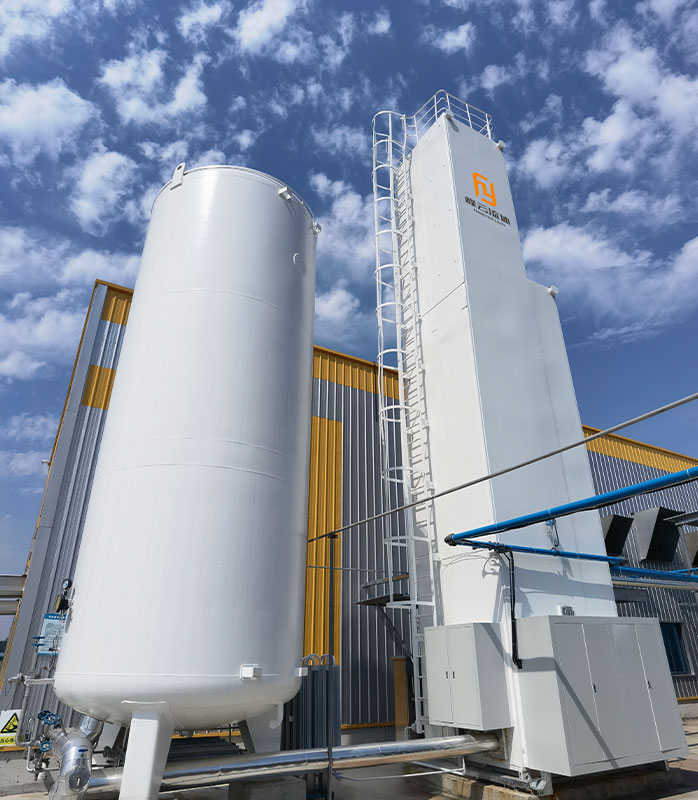
Suzhou Fengyun Fluid Technology Co., Ltd. is a premier engineering manufacturer specializing in high-efficiency expansion turbines for industrial cryogenic air separation units (ASUs) and gas liquefaction plants. Recognized among top-tier China cryogenic turbo expander manufacturers and global cryogenic air separation turbo expander suppliers, we design, engineer, fabricate, and test precision gas-bearing and oil-bearing turbo expanders. Backed by a dedicated technical staff of 86 engineers, our expansion machinery drives critical thermodynamic refrigeration cycles, enabling sub-zero air liquefaction and fractional distillation down to -196°C.
Operating from our specialized manufacturing facility, our company produces full-spectrum expansion machinery—including gas-bearing expanders, oil-lubricated booster turbo expanders, and generator-loaded refrigeration turbines. By converting high-pressure gas enthalpy into mechanical shaft power while achieving temperature drops, our custom cryogenic turbo expanders provide the essential refrigeration work required for gaseous oxygen (GOX), gaseous nitrogen (GAN), liquid oxygen (LOX), liquid nitrogen (LIN), and liquid argon (LAR) production facilities worldwide.
Direct Factory Manufacturing, Aerodynamic Excellence & Precision Quality Control
Direct engagement with a established high efficiency cryogenic turbo expander factory provides plant engineers, EPC contractors, and air separation operators with complete mechanical transparency, customized thermodynamic cycle matching, direct factory pricing, and lifetime technical support. As the sole active refrigeration engine inside any cryogenic cold box, the turbo expander operates at rotational speeds ranging from 20,000 RPM up to 120,000 RPM under extreme cryogenic thermal gradients.
At Suzhou Fengyun Fluid Technology Co., Ltd., our manufacturing facility maintains direct quality control across 3D closed-contour impeller milling, dynamic balancing, precision housing casting, and spin testing. As trusted custom cryogenic turbo expander manufacturers and specialized custom cryogenic air separation turbo expander suppliers, we fabricate expansion impellers from high-strength forged aluminum alloys (such as LC4 and 7075-T6) and stainless steel housings designed to withstand high pressure drops and cryogenic thermal shock. Every unit undergoes 100% non-destructive testing (NDT), dynamic overspeed spin testing, and high-sensitivity helium mass spectrometer leak detection prior to dispatch.
High Isentropic Efficiency (Up to 88% - 92%)
Precision-milled 3D radial-inflow impellers paired with adjustable variable inlet guide vanes (IGVs) optimize gas expansion aerodynamics, achieving exceptional isentropic efficiency across a broad flow range.
Advanced Bearing Options (Gas & Oil Foil)
Selectable aerodynamic gas foil bearings or high-pressure oil lubrication systems eliminate mechanical friction, prevent oil contamination in ultra-pure gas streams, and ensure stable rotor dynamics at high RPM.
Smart PLC Control & Vibration Safeguards
Siemens PLC controllers interface with eddy-current vibration probes, axial thrust sensors, and speed pick-ups, executing automatic overspeed trips, oil pressure interlocks, and remote cloud IoT telemetry.
Selectable Cryogenic Turbo Expander Architectures & Product Series
To match varying plant expansion ratios, gas pressure levels, and power recovery objectives, Suzhou Fengyun Fluid Technology presents a complete lineup of cryogenic turbo expander machinery configurations:
Series 1: High-Speed Aerodynamic Gas-Bearing Turbo Expanders
Designed for small to medium-scale cryogenic air separation units, electronic nitrogen plants, and containerized gas generators where total oil-free operation, compact footprint, and low maintenance overhead are paramount.
1. Oil-Free Gas-Bearing Expansion Turbine Skid
Utilizes process gas to form a hydrodynamic gas film supporting high-speed rotor shafts up to 120,000 RPM. Eliminates oil lubrication skids, seal gas systems, and oil contamination risks in 6N electronic nitrogen plants.
Technical Specs: Expansion Flow: 300 Nm³/h to 5,000 Nm³/h; Rotational Speed: 40,000 to 120,000 RPM; Pressure Ratio: 1.5 to 4.5; Isentropic Efficiency: 82% to 88%.
2. Gas-Blower Loaded Cryogenic Turbo Expander
Pairs the expansion turbine wheel on a common shaft with a centrifugal gas blower, absorbing expansion shaft work to compress process gas or re-circulate waste stream air without electrical generators.
Technical Specs: Direct shaft-coupled compressor load; Automatic variable nozzle guide vane control; Integrated touch-screen HMI.
Series 2: Heavy-Duty Oil-Bearing Booster Turbo Expanders (Compander Units)
Engineered for medium to large-scale metallurgical oxygen plants, chemical air separation complexes, and merchant air liquefiers requiring heavy flow rates and high energy recovery.
1. Oil-Lubricated Booster-Compressor Turbo Expander Skid
Integrates a high-pressure oil lubrication console, dry gas seal system, and a process booster compressor wheel on the opposite end of the turbine shaft. Boosts feed air pressure before it enters the cold box heat exchanger.
Technical Specs: Expansion Flow: 3,000 Nm³/h to 50,000 Nm³/h; Rotational Speed: 15,000 to 45,000 RPM; Pressure Ratio: 2.0 to 8.0; Isentropic Efficiency: 86% to 92%.
2. High-Pressure Dense-Phase Liquid-Yield Turbo Expander
Engineered to handle two-phase gas-liquid condensation near the turbine discharge. Specialized erosion-resistant impeller alloys prevent blade pitting during high-density liquid air or liquid nitrogen generation.
Technical Specs: High liquid mass fraction tolerance; Titanium alloy or specialized LC4 impeller; API 614 oil lubrication skid.
Series 3: Generator-Loaded Cryogenic Power Recovery Expansion Turbines
Designed for energy energy-recovery facilities, pressure reduction stations, and large-tonnage air separation complexes seeking to convert expansion work directly into electric power for the factory grid.
Generator-Coupled Cryogenic Power Recovery Expander Skid
Couples the cryogenic expansion turbine through a precision speed-reducing gearbox to an induction or synchronous electric generator, feeding generated kilowatt-hours directly into site electric distribution networks.
Technical Specs: Power Output Rating: 100 kW to 3,000 kW; Gearbox ratio optimization; Integrated grid-tie electrical protection panel.
Series 4: Modular Cold Box Skid-Mounted Expander Modules
Pre-fabricated, containerized expansion modules designed for rapid site commissioning and overseas container shipping. Integrates the cold turbine housing, warm oil/gas skid, and PLC automation panel on a rigid baseframe.
Plug-and-Play Cold Box Expander Module Skid
Pre-piped and pre-wired expander skid tested at factory facilities prior to shipment. Reduces field erection timelines and minimizes site civil works for modular nitrogen and oxygen plants.
Technical Specs: 85% factory pre-commissioned; Integrated perlite or vacuum insulation casing; Remote Modbus/Profibus SCADA gateway.
Technical Specifications & Performance Parameter Matrix
The following specification matrix summarizes key operating parameters, rotational speed limits, isentropic efficiency ratings, bearing types, and control interfaces across our primary cryogenic turbo expander lines:
| Expander System Series |
Bearing & Lubrication Type |
Achievable Isentropic Efficiency |
Gas Flow Capacity Range |
Rotational Speed Range |
Impeller & Housing Materials |
Automation & PLC Interface |
| Gas-Bearing High-Speed Expander |
Aerodynamic Gas Foil Bearings (100% Oil-Free) |
82% - 88% |
300 to 5,000 Nm³/h |
40,000 - 120,000 RPM |
Forged High-Strength Al LC4 / SS304 Casing |
Siemens S7-1200 PLC + Color Touch Panel |
| Oil-Bearing Booster Compander |
Pressurized Oil Tilt-Pad Bearings + API 614 Skid |
86% - 92% |
3,000 to 50,000 Nm³/h |
15,000 - 45,000 RPM |
3D Forged Al 7075 / Austenitic Stainless Casing |
Redundant DCS SCADA + Bently Nevada Vibration |
| Generator-Loaded Power Expander |
Oil Lubricated / Heavy Reduction Gearbox |
85% - 90% |
5,000 to 60,000 Nm³/h |
10,000 - 30,000 RPM (Turbine) |
High-Strength Alloy Steel Shaft / SS Housing |
Centralized Plant DCS + Grid-Tie Protection |
| Dense-Phase Liquid Yield Expander |
Forced Oil Lubrication + Dry Gas Seals |
84% - 89% |
2,000 to 30,000 Nm³/h |
20,000 - 50,000 RPM |
Erosion-Resistant Titanium / Heavy SS Casing |
Siemens S7-1500 PLC + IoT Diagnostic Gateway |
| Modular Cold Box Skid Module |
Compact Gas or Oil Bearing Skid |
83% - 88% |
500 to 10,000 Nm³/h |
30,000 - 80,000 RPM |
Structural Carbon Steel Base / Al Casing |
Integrated Touch HMI + Cloud Telemetry |
Target Application Scenarios & Proposal Engineering Data
Cryogenic turbo expanders represent the indispensable thermodynamic refrigeration engine across major industrial gas generation and natural gas processing sectors:
Cryogenic Air Separation Units (O2 / N2 / Ar)
Drives main cold box refrigeration loops, enabling deep liquefaction and sub-zero fractional distillation of atmospheric air into liquid oxygen, liquid nitrogen, and liquid argon.
Semiconductor Ultra-Pure Nitrogen Plants (6N Grade)
Deploys 100% oil-free gas-bearing turbo expanders to produce sub-zero refrigeration without introducing hydrocarbon oil vapors into electronic wafer carrier gas streams.
Liquid Nitrogen & Oxygen Merchant Liquefiers
Provides heavy expansion cooling capacity for merchant liquid gas plants, maximizing liquid tons per day yield for regional gas suppliers and road tanker filling bays.
LNG Liquefaction & Industrial Power Recovery
Executes natural gas expansion pre-cooling and pressure reduction energy recovery, capturing waste expansion enthalpy to generate electricity or drive process boosters.
Information Required for Custom Technical Quotations
To assist our application engineering team in calculating thermodynamic enthalpy drop, sizing 3D impellers, selecting bearing configurations, and designing oil/gas skids, buyers should provide the following baseline parameters:
1. Process Gas Composition: Fluid composition (air, pure N2, O2, or natural gas) and molecular weight.
2. Inlet Gas Parameters: Mass flow rate (Nm³/h or kg/h), inlet pressure (MPa), and inlet temperature (°C).
3. Required Outlet Parameters: Target discharge pressure (MPa) or required refrigeration duty (kW).
4. Preferred Load Type: Booster compressor, gas blower, electric generator, or oil brake.
5. Site Utility Specifications: Available electric power parameters, cooling water temperature, and instrument air supply pressure.
Field Erection Supervision, FAT/SAT Acceptance Standards & Maintenance
Suzhou Fengyun Fluid Technology Co., Ltd. provides comprehensive EPCM engineering support for turbo expander installations. Our experienced field engineers guide clients through baseframe leveling, oil skid piping, cold box penetration sealing, dynamic spin testing, and cold commissioning.
Field Skid Erection & Cold Box Sealing
Our technical specialists supervise expander skid alignment, cold turbine flange connection, seal gas supply piping, and perlite insulation packing around cold box penetrations.
FAT & SAT Testing Standards
Factory Acceptance Testing (FAT) validates rotor dynamic balance, housing hydrostatic pressure, oil skid performance, and overspeed trip logic. Site Acceptance Testing (SAT) certifies temperature drop performance, isentropic efficiency, and continuous stability under load changes.
OEM Spare Parts & Cloud Telemetry
We supply spare expander rotor cartridges, 3D milled impellers, tilt-pad bearings, dry gas seal kits, and filter elements, paired with 24/7 cloud IoT telemetry for predictive vibration and temperature monitoring.
Frequently Asked Questions (FAQ)
1. What is the fundamental thermodynamic role of a cryogenic turbo expander in an air separation plant?
A cryogenic turbo expander is the primary refrigeration engine of an air separation unit (ASU). It receives high-pressure process air or nitrogen and expands it adiabatically across a high-speed rotating turbine wheel. As the gas expands and does mechanical work (driving a booster compressor or generator), its pressure and enthalpy drop drastically, creating cold temperatures (down to -170°C to -196°C). This sub-zero refrigeration offsets ambient heat leak and drives column air liquefaction and fractional distillation.
2. What are the key operational differences between gas-bearing and oil-bearing turbo expanders?
Gas-bearing turbo expanders utilize process gas to create an aerodynamic foil film that floats the rotor shaft at ultra-high speeds (up to 120,000 RPM). They are 100% oil-free, highly compact, and ideal for smaller ASUs or electronic nitrogen plants where oil contamination cannot be tolerated. Oil-bearing turbo expanders use pressurized oil lubrication skids with tilt-pad bearings; they support much larger gas flow rates, higher pressure ratios, and heavy booster compressor loads in large-tonnage metallurgical oxygen and liquid plants.
3. How do adjustable variable inlet guide vanes (IGVs) maintain expander efficiency under changing plant loads?
Variable inlet guide vanes (IGVs) located upstream of the expansion impeller rotate to alter the gas flow nozzle throat area and angle of entry into the turbine blades. When factory gas demand decreases, the PLC closes the IGVs slightly, adjusting gas velocity and preserving optimal flow angles onto the impeller blades. This keeps isentropic expansion efficiency high (85%+) even during turndown conditions between 50% and 110% of nominal plant capacity.
4. What safety instrumentation protects high-speed turbo expanders against mechanical damage?
Because rotor shafts spin at tens of thousands of RPM, expanders are equipped with multi-layered safety instrumentation. Non-contact eddy-current probes continuously monitor radial shaft vibration and axial displacement. Magnetic speed pick-ups detect overspeed conditions, triggering automated pneumatic quick-closing trip valves in milliseconds. In oil-lubricated units, oil pressure, oil temperature, and seal gas differential pressure transducers ensure full lubrication before shaft rotation begins.
5. What turnkey execution and long-term service support does Suzhou Fengyun Fluid Technology provide?
As a direct machinery engineering manufacturer, Suzhou Fengyun Fluid Technology provides complete turnkey project support including thermodynamic calculation, 3D impeller design, shop manufacturing, field erection supervision, cold commissioning, and operator training. Post-commissioning, clients benefit from 24/7 cloud IoT diagnostic monitoring, predictive maintenance alerts, and fast-response OEM replacement rotor cartridge supply.

 English
 中文简体