Custom Molecular Sieve Purifiers & Temperature Swing Adsorption (TSA) Systems for Cryogenic Air Separation
Suzhou Fengyun Fluid Technology Co., Ltd. is a premier engineering manufacturer and global solution provider specializing in pre-purification systems for industrial cryogenic air separation units (ASUs). Recognized among leading molecular sieve purifier for cryogenic air separation manufacturers and trusted process equipment builders, we engineer, fabricate, deploy, and maintain custom Temperature Swing Adsorption (TSA) and Pressure-Temperature Swing Adsorption (PTSA) molecular sieve purification skids. Backed by an experienced engineering staff of 86 technical specialists, our pre-purification systems safeguard sub-zero distillation cold boxes against trace moisture, carbon dioxide, acetylene, and volatile hydrocarbon contamination.
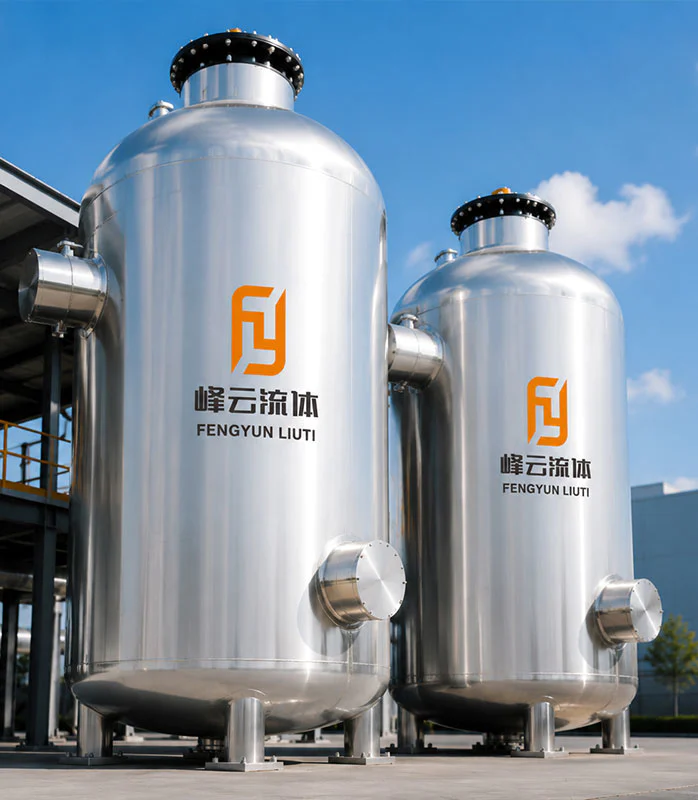
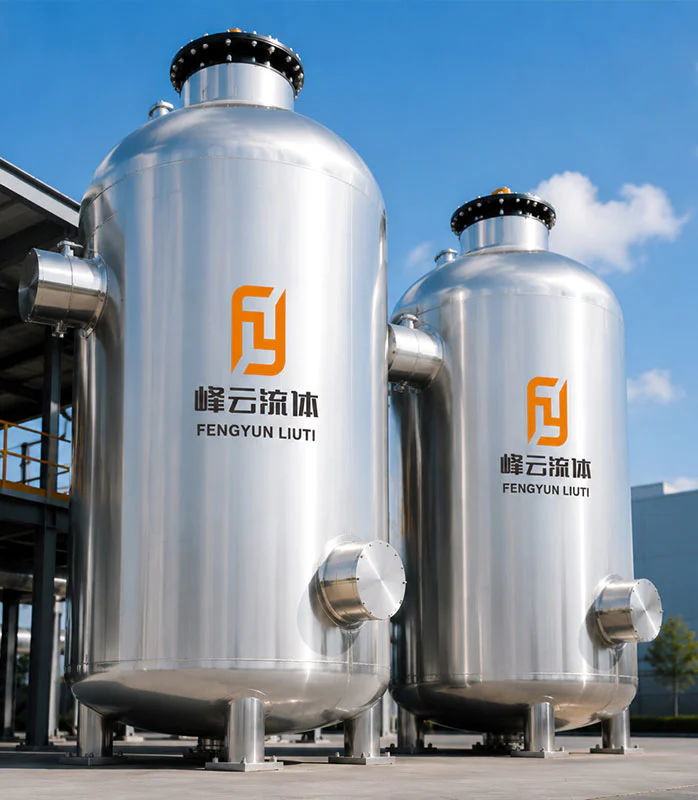
Operating from our specialized cryogenic molecular sieve adsorber factory, we manufacture heavy-duty pressure vessel adsorber pairs, electric and steam regeneration gas heaters, automated switching valve manifolds, and high-capacity synthetic zeolite desiccant beds. By thoroughly stripping atmospheric air contaminants down to sub-ppm levels before feed gas enters aluminum plate-fin heat exchangers, our custom purifiers prevent ice and solid carbon dioxide blockages, eliminate combustion hazards in liquid oxygen sumps, and ensure decades of continuous, energy-efficient plant operation.
Direct Factory Manufacturing, Quality Control Standards & Engineering Positioning
Engaging directly with an established China cryogenic molecular sieve adsorber factory gives plant managers, EPC contractors, and gas utility directors complete mechanical transparency, customized bed sizing, direct factory pricing, and lifetime OEM technical support without third-party vendor markups. In cryogenic air separation, pre-purification represents the vital safety shield protecting sub-zero heat exchangers operating between -170°C and -196°C. Without robust molecular sieve adsorber beds, trace atmospheric water vapor (H2O) and carbon dioxide (CO2) would rapidly freeze solid inside delicate plate-fin channels, causing fatal pressure drops and catastrophic operational shutdowns.
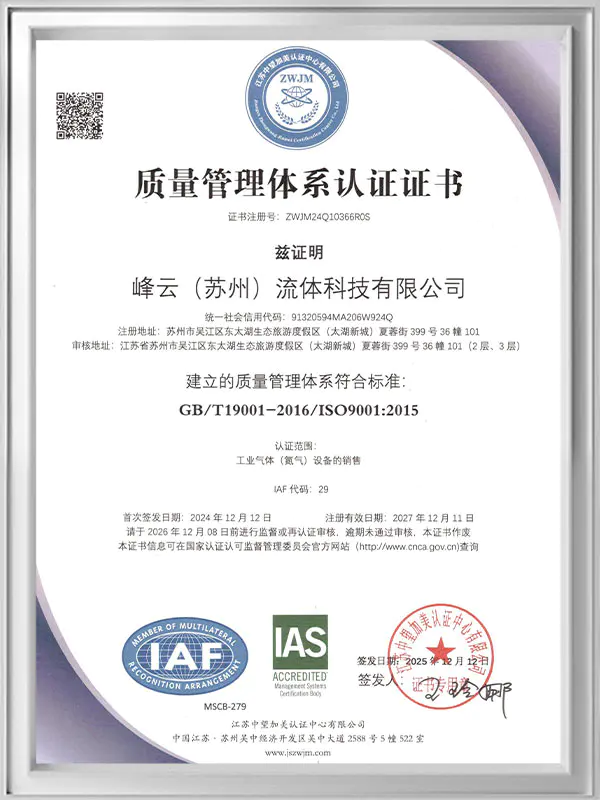
At Suzhou Fengyun Fluid Technology Co., Ltd., our manufacturing facility executes precision pressure vessel fabrication, automated internal flow distributor welding, synthetic zeolite bed packing, and valve manifold assembly under strict ISO 9001, ASME Section VIII Division 1, and GB pressure equipment directives. Every molecular sieve vessel pair undergoes 100% non-destructive testing (NDT), X-ray weld examination, hydrostatic pressure testing, and high-sensitivity helium mass spectrometer leak detection prior to factory dispatch, ensuring total structural integrity under thermal and pressure swing cycling.
Sub-PPM Impurity Stripping Performance
Multi-layer desiccant beds combining activated alumina and 13X APG synthetic molecular sieves strip residual CO2 down to ≤ 1.0 ppm, H2O moisture down to dew points of ≤ -70°C, and acetylene/C2H2 below dangerous lower explosive limits.
Energy-Saving Thermal Regeneration Cycle
Utilizes waste dry nitrogen gas from the distillation cold box as the regeneration medium, paired with low-watt-density electric or steam heaters to desorb moisture and CO2 efficiently while lowering electrical power consumption.
Automated PLC / DCS Valve Switching
Siemens PLC and DCS controllers govern double-acting pneumatic switching valves with soft-closing actuators, preventing pressure surges, fluidization of desiccant beads, and mechanical abrasion during vessel bed changeovers.
Selectable Molecular Sieve Purifier Configurations & Product Lineup
To accommodate varying feed air flow volumes, air compressor discharge pressures, and site thermal utilities, Suzhou Fengyun Fluid Technology presents a complete range of pre-purification system architectures. As reputable molecular sieve purifier for cryogenic air separation suppliers, we tailor each engineering design to match exact customer requirements:
Series 1: Temperature Swing Adsorption (TSA) Dual-Vessel Molecular Sieve Systems
The classical and most reliable pre-purification process architecture for medium to large-scale industrial air separation plants. Features two vertical pressure vessels operating in alternating cycles: while one vessel adsorbs impurities from high-pressure feed air, the second vessel undergoes depressurization, heated waste gas regeneration, cooling, and re-pressurization.
1. Vertical Vessel Electric-Heated TSA Purifier Skid
Equipped with low-watt-density electric tubular heating bundles and internal flow distributors. Ideal for facilities without high-pressure steam utility connections, delivering complete desiccant bed reactivation with automatic temperature curve tracking.
Technical Specs: Air Flow Range: 1,000 Nm³/h to 30,000 Nm³/h; Working Pressure: 0.6 MPa to 1.2 MPa; Regeneration Temp: 180°C to 220°C; Residual CO2 ≤ 1.0 ppm.
2. Steam-Heated High-Tonnage TSA Purifier Unit
Utilizes plant waste steam in shell-and-tube heat exchangers to heat waste nitrogen regeneration gas, drastically reducing electric power draw for large metallurgical and chemical ASU complexes.
Technical Specs: Air Flow Range: 10,000 Nm³/h to 60,000 Nm³/h; Steam Pressure: 0.4 MPa to 1.0 MPa; Dual safety relief valve manifold; PLC auto-switching.
Series 2: Pressure-Temperature Swing Adsorption (PTSA) Energy-Saving Purifiers
Combines deep pressure reduction blowdown with moderate thermal heating, significantly reducing the required volume of dry regeneration gas and lowering total energy input per Nm³ of purified air processed.
1. Low-Regeneration-Gas PTSA Molecular Sieve System
Engineered for plants with limited dry waste gas availability. By optimizing adsorption bed aspect ratios and utilizing fast-cycle vacuum pressure blowdown, regeneration dry gas demand is reduced by up to 25%.
Technical Specs: Air Flow Capacity: 3,000 Nm³/h to 40,000 Nm³/h; Working Pressure: 0.8 MPa to 1.6 MPa; Reduced heat consumption profile.
2. Radial Bed High-Velocity PTSA Purifier Vessels
Features radial flow vessel design where feed air travels horizontally from an outer cylindrical distributor to an inner core. Radial geometry reduces vessel pressure drop by up to 60% compared to vertical axial beds, lowering air compressor discharge pressure requirements.
Technical Specs: Air Flow Capacity: 20,000 Nm³/h to 80,000 Nm³/h; Extremely low bed pressure drop (ΔP ≤ 5 kPa); Compact footprint.
Series 3: Containerized & Modular Skid-Mounted Molecular Sieve Purifier Skids
Manufactured inside our state-of-the-art custom cryogenic molecular sieve purifier factory, these fully pre-assembled skids integrate vessels, piping manifolds, valves, heaters, and PLC panels onto a rigid structural frame.
Plug-and-Play Skid-Mounted Pre-Purification Unit
Pre-wired, pre-piped, and factory hydro-tested for rapid site installation. Ideal for containerized nitrogen plants, remote mining camps, and modular air separation facilities requiring minimal site field welding.
Technical Specs: Capacity: 500 Nm³/h to 5,000 Nm³/h; 90% factory pre-commissioned; Touchscreen PLC HMI with remote Modbus RS485 telemetry.
Technical Specifications & Performance Parameter Matrix
The following practical table summarizes key technical parameters, gas flow capacities, working pressures, impurity removal limits, and structural materials across our main molecular sieve purifier series:
| Purifier System Configuration |
Adsorption Process Mode |
Impurity Outlet Thresholds |
Air Flow Capacity Range |
Adsorption Working Pressure |
Pressure Vessel Materials |
Automation & Valve Interlock |
| Vertical TSA Electric-Heated Unit |
Thermal Swing (TSA) |
CO2 ≤ 1.0 ppm; H2O dew point ≤ -70°C |
1,000 to 30,000 Nm³/h |
0.6 - 1.2 MPa |
Q345R / SA516 Gr.70 Pressure Vessel Steel |
Siemens S7-1500 PLC + Color Touch HMI |
| Vertical TSA Steam-Heated Unit |
Thermal Swing (TSA) |
CO2 ≤ 0.5 ppm; C2H2 ≤ 0.01 ppm |
10,000 to 60,000 Nm³/h |
0.6 - 1.2 MPa |
Boiler Quality Steel / SS Internal Grates |
Redundant DCS SCADA + ESD Safety Trip |
| Low-Regeneration PTSA Unit |
Pressure-Thermal Swing |
CO2 ≤ 1.0 ppm; H2O ≤ 1.0 ppm |
3,000 to 40,000 Nm³/h |
0.8 - 1.6 MPa |
Q345R Vessel Steel / 13X APG Molecular Sieve |
Siemens PLC + Soft-Closing Pneumatic Valves |
| Radial Bed Energy-Saving PTSA |
Radial Flow PTSA |
CO2 ≤ 0.5 ppm; Dew point ≤ -75°C |
20,000 to 80,000 Nm³/h |
0.6 - 1.0 MPa |
High-Grade Pressure Vessel Alloy Steel |
Centralized Plant DCS + Telemetry Gateway |
| Modular Skid-Mounted Purifier |
Compact TSA / PTSA Skid |
CO2 ≤ 1.0 ppm; H2O ≤ 1.0 ppm |
500 to 5,000 Nm³/h |
0.6 - 1.2 MPa |
Structural Carbon Steel Skid Frame / SS Piping |
Integrated Touch HMI + Remote Diagnostic Gateway |
Target Application Scenarios & Required Data for Technical Quotes
Molecular sieve pre-purification systems represent an indispensable safety and process requirement across all cryogenic air separation facilities and high-purity industrial gas generation plants:
Steelmaking & Blast Furnace Oxygen Plants
Protects large-tonnage cryogenic oxygen plant cold boxes from carbon dioxide freezing and hydrocarbon accumulation, ensuring uninterrupted oxygen delivery for steelmaking blowers.
Petrochemical Refineries & Coal Chemical Synthesis
Removes trace acetylene, ethylene, and heavy hydrocarbons from feed air, eliminating safety hazards in liquid oxygen reboilers operating within chemical gasification complexes.
Semiconductor Fabs & Photovoltaics (Ultra-Pure N2)
Provides deep pre-cleaning for 6N ultra-pure nitrogen air separation plants, preventing moisture and carbon dioxide contamination in semiconductor wafer carrier gas streams.
Merchant Liquid Nitrogen & Oxygen Liquefiers
Maintains absolute feed gas purity for full-liquefaction air separation plants, preventing solid CO2 snow formation in high-pressure expansion turbines and liquid pumps.
Information Required to Prepare a Custom Technical Proposal
To assist our project engineering team in calculating desiccant bed volume, selecting molecular sieve grade, sizing regeneration heaters, and designing valve manifolds, buyers should provide the following baseline inputs:
1. Feed Air Flow Rate: Total compressed air flow rate entering the purifier skid (Nm³/h or m³/min).
2. Inlet Working Pressure & Temperature: Feed air pressure (MPa) and temperature (°C) after the pre-cooling air chiller.
3. Available Regeneration Medium: Flow rate, pressure, and moisture content of dry waste nitrogen or dry air available for vessel bed heating.
4. Regeneration Heating Utility Preference: Preferred heating method—electric tubular heaters, steam heat exchangers, or hybrid heating.
5. Ambient Environmental Conditions: Local altitude, atmospheric pressure, relative humidity, and specified pressure vessel design codes (ASME, PED, or GB).
Installation Guidance, Acceptance Testing Standards & Lifecycle Support
Suzhou Fengyun Fluid Technology Co., Ltd. provides full EPCM engineering support for molecular sieve pre-purification systems. Our experienced field engineers guide clients through civil pad layout, vessel lifting, desiccant bed loading, valve actuation checks, and cold commissioning.
Field Vessel Lifting & Desiccant Packing
Our installation specialists supervise vertical vessel positioning, bed support grate alignment, ceramic ball layering, and dense molecular sieve packing to prevent bed channeling and fluidization dust creation.
FAT & SAT Testing Protocol
Factory Acceptance Testing (FAT) certifies vessel hydro-testing, valve stroke timing, and PLC switching logic. Site Acceptance Testing (SAT) verifies online CO2 dew point performance, regeneration heating temperature profiles, and automatic safety shutoffs.
OEM Spare Parts & Cloud Telemetry
We supply certified 13X APG molecular sieves, activated alumina, pneumatic valve repair kits, and electric heating elements, paired with 24/7 cloud IoT telemetry for predictive maintenance monitoring.
Frequently Asked Questions (FAQ)
1. Why is a molecular sieve pre-purifier essential before air enters the cryogenic cold box?
Atmospheric air contains water vapor (humidity), carbon dioxide (CO2), and trace hydrocarbons like acetylene. At cryogenic distillation temperatures (-170°C to -196°C), water and CO2 freeze solid, which would quickly block heat exchanger passages and distillation trays. Furthermore, hydrocarbons accumulating in liquid oxygen sumps present severe explosion hazards. A molecular sieve purifier removes these contaminants down to sub-ppm levels before feed air enters sub-zero equipment, ensuring continuous operation and safety.
2. What is the operational difference between 13X APG molecular sieves and activated alumina in adsorber beds?
In our dual-layer adsorber vessel designs, activated alumina is placed at the bottom inlet layer to strip bulk moisture droplets and high-humidity water vapor from incoming air. The 13X APG (Air Purification Grade) synthetic molecular sieve is placed above the alumina layer to selectively adsorb carbon dioxide (CO2), residual moisture, acetylene, and trace hydrocarbons. This layered combination protects the molecular sieve from liquid moisture degradation while maximizing CO2 adsorption capacity.
3. How does the automated valve switching system prevent desiccant bead fluidization and dust creation?
During vessel bed changeovers, rapid pressure changes can cause gas velocity spikes that lift desiccant beads, causing mechanical abrasion and dust that fouls downstream filters. Our Siemens PLC controller uses soft-closing pneumatic switching valves equipped with slow-opening equalizing bypass lines. This ensures smooth, gradual vessel pressurization and depressurization, maintaining bed stability and extending desiccant service life beyond 5 to 8 years.
4. What is the typical service lifespan of synthetic molecular sieve desiccant media?
Under normal operating conditions with proper upstream air chilling and oil separation, high-grade 13X APG molecular sieves typically last between 5 and 8 years before requiring replacement. Regular monitoring of regeneration temperature curves and dew point analyzers helps detect gradual aging, allowing plant managers to schedule desiccant replacement during planned major maintenance turnarounds.
5. What turnkey engineering services does Suzhou Fengyun Fluid Technology provide after purchasing?
As a direct equipment manufacturer, Suzhou Fengyun Fluid Technology provides complete turnkey services including process engineering, pressure vessel manufacturing, field erection supervision, molecular sieve loading, FAT/SAT acceptance testing, and operator training. Post-commissioning, clients benefit from 24/7 cloud IoT remote diagnostic monitoring, predictive maintenance alerts, and lifetime OEM spare parts supply.

 English
 中文简体